
All Manhattan ZIP codes
Water Damage Restoration in Manhattan
Almost everyone in Manhattan lives or works in a building shared with dozens or hundreds of others. Water damage here usually starts somewhere else: an apartment upstairs, a riser in the wall, a rooftop water tank, a sprinkler line, or a pipe in an office above a store. Getting it under control means working with the super, the managing agent and several insurers at once.
One call connects you with an independent restoration company that works in Manhattan buildings, around the clock.
Manhattan at a glance
- Borough
- New York County, New York City
- Biggest local risks
- Leaks between units, riser and sprinkler failures
- Contractor licensing
- NYC Dept. of Consumer and Worker Protection
Answered 24/7 · free to call
Water damage risks in Manhattan buildings
Leaks from above
Overflowing tubs, failed toilet supply lines, dishwasher and washing machine leaks, and renovation mistakes in the unit upstairs are the most common causes of ceiling damage. Water spreads along slab ceilings and comes out at light fixtures, sprinkler heads and seams far from the source.
Risers, steam heat and water tanks
Older buildings have hot and cold risers, steam radiators and valves, and rooftop water tanks that feed the building by gravity. A riser break or a radiator valve failure can damage many floors. Tank overflows and roof drains clogged with debris cause top-floor leaks.
Sprinklers and commercial space
Office towers, stores and restaurants have sprinkler systems that can discharge from freeze damage, corrosion or accidental impact. Fast extraction and after-hours drying keep businesses open. See commercial water damage.
Coastal flooding
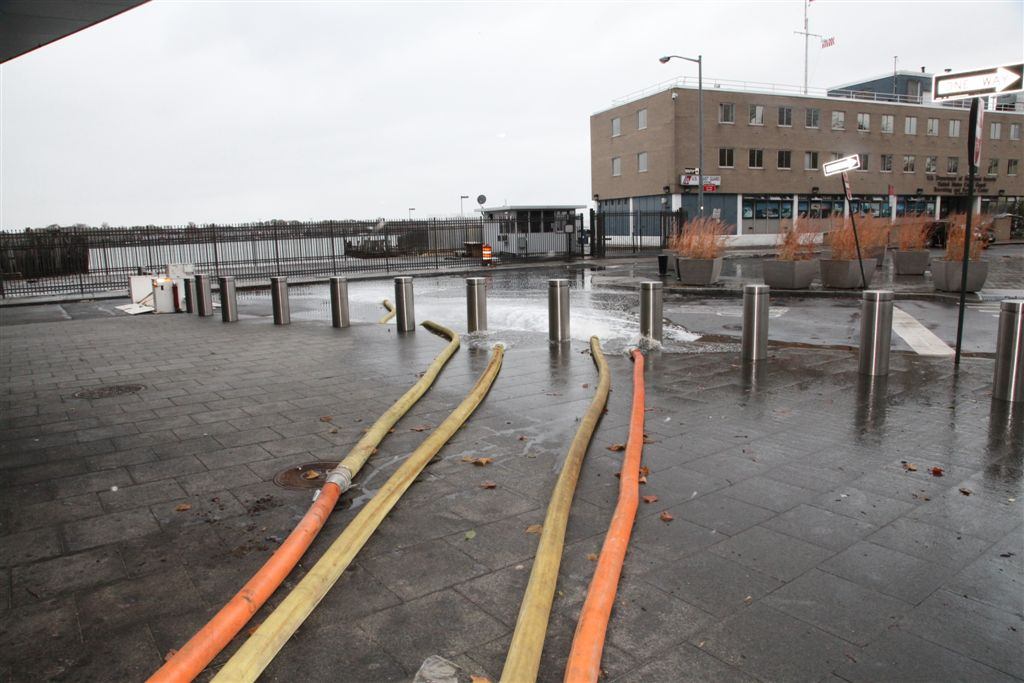
Sandy’s surge in October 2012 flooded Lower Manhattan, including Battery Park City, the Financial District and the South Street Seaport, and low parts of the Lower East Side and East Village along the East River. Buildings there keep boilers, electrical rooms and elevator machinery in cellars exposed to surge. The city’s East Side Coastal Resiliency project is building new flood protection along the East River.
What to do when water comes through your ceiling
Protect people and electricity
Turn off power to any wet light fixture or outlet at the breaker. Stay out from under a sagging ceiling.
Get the source stopped
Call the doorman, super or managing agent right away so staff can check the unit above and shut the riser or fixture valve.
Move belongings and contain the water
Move furniture, rugs and electronics. Put down towels and buckets.
Document
Photograph and video the damage, the source if you can see it, and your belongings.
Notify in writing
Email the managing agent and notify your HO-6 or renters insurer. The building’s policy and the upstairs resident’s policy may also be involved.
Start drying
Wet drywall, plaster and hardwood floors need professional drying within 24 to 48 hours to prevent mold and cupping. See ceiling and apartment leaks.
Co-ops, condos and rentals
- Co-ops: the proprietary lease and house rules decide whether the co-op or the shareholder repairs a given pipe, wall or finish. Shareholders usually cover their own improvements and belongings with an HO-6 policy.
- Condos: the declaration and bylaws divide unit interiors from common elements. The condo’s master policy covers part of the building.
- Rentals: the landlord repairs the apartment; renters insurance covers belongings. If repairs stall, 311 can open an HPD complaint.
- Alteration agreements: if the leak came from a neighbor’s renovation, their alteration agreement and contractor’s insurance may apply.
Working in Manhattan buildings
Most co-op, condo and office buildings require contractors to provide a certificate of insurance naming the building and its managing agent before work starts, and many limit non-emergency work to weekday hours and require use of a service elevator. Emergency water extraction is usually allowed at any hour. Tell the restoration company your building’s requirements when you call so the right paperwork is ready.
- Ask for the company’s NYC home improvement contractor license from the Department of Consumer and Worker Protection.
- Ask for daily moisture readings and a written drying log for the building and your insurer.
- For mold over 10 square feet, New York requires a licensed mold assessor and a separate licensed remediator.
ZIP codes we take calls from in Manhattan
Calls are accepted from every Manhattan ZIP code below. If you are not sure, call anyway: the team will tell you right away whether it can help.
- 10001
- 10002
- 10003
- 10004
- 10005
- 10006
- 10007
- 10009
- 10010
- 10011
- 10012
- 10013
- 10014
- 10016
- 10017
- 10018
- 10019
- 10020
- 10021
- 10022
- 10023
- 10024
- 10025
- 10026
- 10027
- 10028
- 10029
- 10030
- 10031
- 10032
- 10033
- 10034
- 10035
- 10036
- 10037
- 10038
- 10039
- 10040
- 10044
- 10065
- 10069
- 10075
- 10103
- 10110
- 10111
- 10112
- 10115
- 10119
- 10128
- 10152
- 10153
- 10154
- 10162
- 10165
- 10167
- 10168
- 10169
- 10170
- 10171
- 10172
- 10173
- 10174
- 10177
- 10199
- 10271
- 10278
- 10279
- 10280
- 10282
Common questions
Water damage in Manhattan: common questions
Do you serve all of Manhattan?
Calls are accepted from every Manhattan ZIP code listed below, from the Financial District to Inwood and Roosevelt Island. The company that answers confirms availability for your building.
Who pays for ceiling damage from the apartment above in a Manhattan co-op?
It depends on the cause and the proprietary lease. Often the co-op repairs the structure, each shareholder’s HO-6 policy covers their own improvements and belongings, and the insurers sort out recovery from the responsible party. Report it in writing to the managing agent.
My building requires a certificate of insurance. Can a restoration company provide one quickly?
Most established commercial and residential restoration companies can issue a certificate of insurance on short notice. Give them the managing agent’s exact requirements when you call.
Can hardwood floors be saved after a leak?
Often, if drying starts quickly. Specialized floor drying mats and dehumidifiers can pull water out of the wood and subfloor. Floors that have cupped badly may need refinishing or replacement once dry.
Local water damage help in Manhattan
Call (800) 000-0000, 24 hours a day, 7 days a week.