
Flooded basements · sump pump failures
Flooded Basement Cleanup and Drying
Basements are where most water damage in the New York area ends up. Water runs downhill, foundation walls let groundwater in during long storms, and the basement is where the water heater, washer, boiler and sump pump all live. When a finished basement floods, the damage is usually behind the walls and under the floor, not just on the carpet.
Call now if
- Water is coming up through the floor or seeping at the wall joint
- The sump pump is running constantly or not at all
- Water is backing up from a floor drain
- A finished basement smells musty after heavy rain
Answered 24/7 · free to call
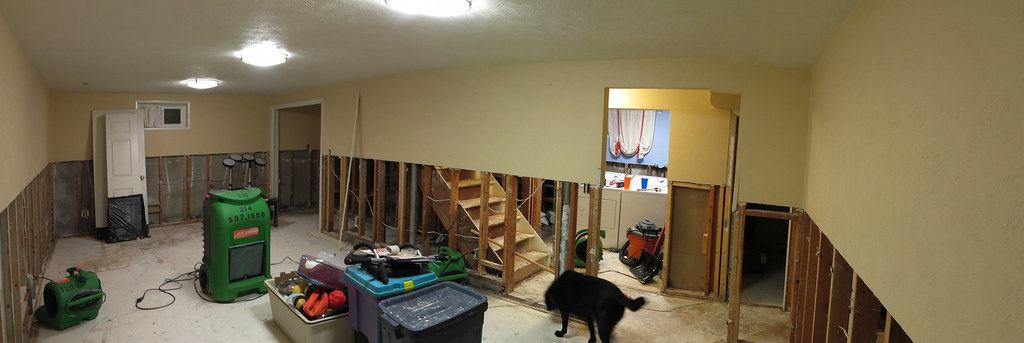
How a flooded basement should be handled depends on where the water came from. That also decides what your insurance is likely to cover.
First: is it safe to go down there?
Do not walk into a basement with standing water if outlets, extension cords, a furnace or the electrical panel are underwater or close to it. Shut power off at the main breaker only if you can reach it while standing somewhere dry. Otherwise, call your utility to cut power at the meter.
If the water came up through a floor drain or toilet and smells of sewage, treat it as contaminated. Keep children and pets out. See sewage backup cleanup for what that changes.
Where the water came from matters
| Source | What it looks like | What it usually means |
|---|---|---|
| Plumbing or appliance | Water near the water heater, washer or a pipe | Clean or gray water. Often covered by homeowners insurance. |
| Sump pump failure | Sump pit overflowing, pump dead or stuck | Groundwater. Covered only with a water backup / sump overflow endorsement. |
| Sewer or drain backup | Water rising from a floor drain, toilet or tub | Contaminated. Needs a water backup endorsement. |
| Seepage through walls or floor | Wet line along the wall base, damp spots in the slab | Groundwater pressure. Often excluded as seepage. |
| Surface flooding | Water entering through window wells, doors or from outside | Flood. Covered only by a separate flood policy. |
This is a general guide. Your policy wording decides what is covered. Photograph where the water entered before cleanup starts; that evidence matters for the claim.
Why basements flood on Long Island and in Westchester
Intense rain
Short, heavy downpours overwhelm gutters, window wells and storm drains. The record is local: on August 12 to 13, 2014, Islip MacArthur Airport recorded 13.57 inches of rain in 24 hours, the official New York State record, and basements across central Long Island flooded. In September 2021 the remnants of Hurricane Ida flooded basements across Westchester and New York City.
High groundwater near the shore
Along the South Shore of Long Island, near the Long Island Sound, and in low areas close to Westchester rivers, the water table can sit close to basement floors. After long wet spells, groundwater pushes in through the floor-wall joint and cracks. That is when sump pumps work hardest.
Sump pumps that fail when they are needed most
Sump pumps fail from age, a stuck float switch, a clogged intake, or a power outage during the storm that is filling the pit. A battery backup or water-powered backup pump is one of the most effective upgrades for a finished basement.
Cesspools and septic in Suffolk
Roughly three quarters of homes in Suffolk County are not connected to a sewer and rely on cesspools or septic systems, according to Suffolk County. When a cesspool is full or saturated by groundwater, the first fixture to back up is often a basement drain or a basement bathroom.
How a flooded basement is cleaned up
Pump out
Standing water is pumped out. For deep water, it is pumped down gradually so pressure from saturated soil does not damage the foundation walls.
Remove and sort
Wet carpet, pad, and cardboard storage are removed. Contents that can be saved are moved and dried. Anything touched by sewage or floodwater that cannot be disinfected is discarded and photographed for the claim.
Open the walls
In finished basements, the bottom of the drywall and the insulation behind it are usually removed so the wall cavity and foundation wall can dry.
Clean and treat
Surfaces are cleaned, and treated with EPA-registered disinfectants when the water was contaminated.
Dry to a measured standard
Dehumidifiers and air movers run until meters show the framing, concrete and remaining materials are dry.
Making the next storm less damaging
- Extend downspouts at least 6 to 10 feet from the foundation and keep gutters clear.
- Fit window well covers, and make sure the soil slopes away from the house.
- Test the sump pump every season by pouring water into the pit. Add a battery or water-powered backup.
- Ask a plumber about a backwater valve if your basement has a floor drain or bathroom.
- Raise the water heater, boiler and washer on platforms where possible, and store valuables in plastic bins on shelves.
- Ask your insurance agent about a water backup and sump overflow endorsement and about flood insurance, even outside high-risk flood zones.
Where we help
Calls are answered for homes and businesses across Long Island, Westchester, New York City and the Hudson Valley.
Common questions
Basement flooding: common questions
Does homeowners insurance cover a flooded basement?
It depends on the source. Water from a burst pipe or failed appliance is commonly covered. Water from a sewer backup or failed sump pump usually needs a water backup endorsement. Water from outside flooding or groundwater seepage is generally excluded from homeowners policies and is covered only by flood insurance. Check your own policy and call your insurer.
How long will my basement take to dry?
After the water is out and wet materials are removed, most basements need four to seven days of drying equipment. Concrete and foundation walls hold a lot of moisture, so basements take longer than upstairs rooms.
Can I keep the carpet?
Carpet soaked by clean water and dried quickly can sometimes be saved, though the pad underneath is usually replaced. Carpet soaked by sewage or outside floodwater should be discarded.
My sump pump is running nonstop. Should I be worried?
A pump that runs constantly during heavy rain may be doing its job, but it may also be undersized, stuck, or about to fail. Check that the discharge line is not frozen or blocked and that water is actually leaving the pit. Have a backup plan in case it stops.
Will a flooded basement cause mold?
It can, quickly. Mold can start within 24 to 48 hours on wet drywall, carpet and wood. Drying fast and removing materials that cannot be dried is the best prevention. In New York, mold remediation of more than 10 square feet must be done by a licensed contractor after an assessment by a separate licensed assessor.
Is it safe to use the washer and toilets after a basement backup?
If the water came from a sewer or cesspool backup, stop using water until a plumber or your sewer authority finds and clears the problem. Every flush or load adds to the backup.
Should I buy flood insurance if I am not in a flood zone?
It is worth asking about. A meaningful share of flood claims nationwide come from outside high-risk zones, and policies through the National Flood Insurance Program usually have a 30-day waiting period, so you cannot buy one when a storm is already forecast.
Related
Related services
Need basement flooding help now?
Call (800) 000-0000. Answered 24 hours a day, 7 days a week.