
Ceiling leaks · upstairs neighbors · roof leaks
Ceiling Leaks and Apartment Water Damage
A brown stain spreading across the ceiling, water dripping through a light fixture, or a ceiling that has started to sag: these are some of the most common water damage calls in the New York area. In houses, the source is usually a bathroom, a roof or an ice dam. In apartment buildings, condos and co-ops, it is often the unit upstairs.
Call now if
- Water is dripping through the ceiling or a light fixture
- The ceiling is bulging, sagging or cracked
- A stain keeps growing after rain or showers upstairs
- Paint is bubbling or peeling on the ceiling
Answered 24/7 · free to call
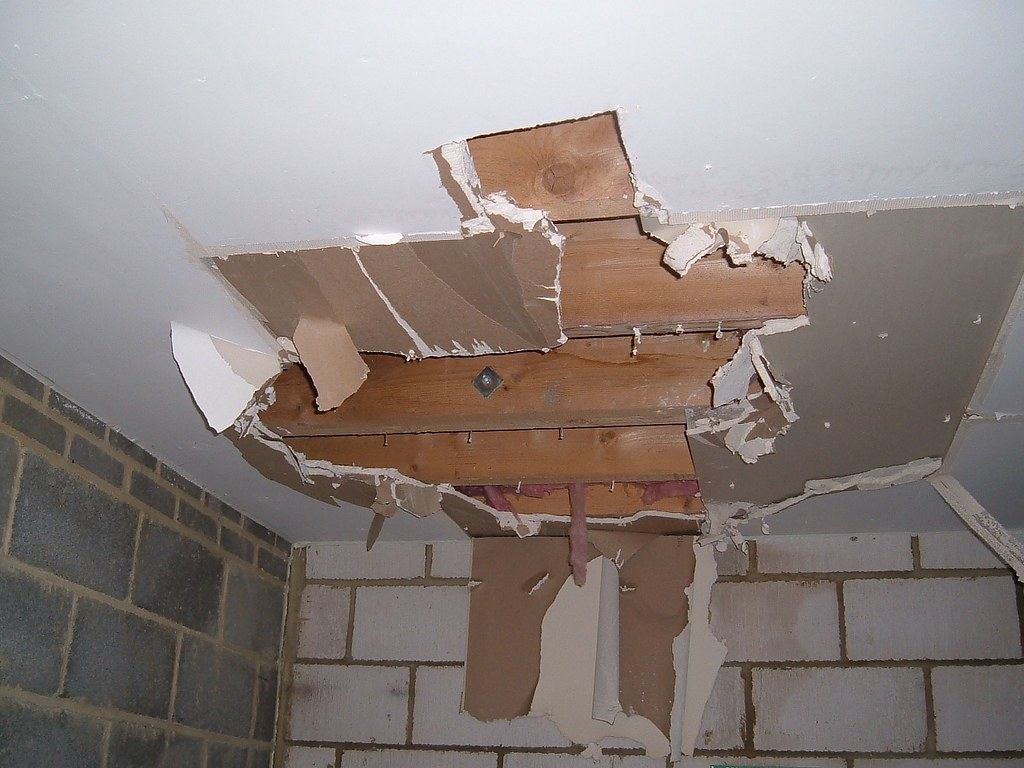
Ceiling leaks are also where people get hurt. Wet drywall and plaster can hold a surprising amount of water and fall without warning.
What to do in the first few minutes
Get people out from under it
If the ceiling is sagging, keep everyone out of the room. Do not stand under it to poke it.
Cut power to that room
Turn off the breaker for lights and fans in the ceiling if water is coming through a fixture.
Find and stop the source
In a house, shut off the fixture or the main valve. In an apartment, knock on the door upstairs and call the super or managing agent, who can shut off the riser.
Catch the water
Put buckets and towels down, and move furniture and electronics out of the way.
Document it
Take photos and video of the ceiling, the dripping and any damage. In buildings, write down the time you notified the neighbor and management.
Common causes
Bathrooms and kitchens above
Failed wax rings under toilets, cracked tub and shower pans, worn grout, supply-line failures and dishwasher leaks are the most frequent sources. A stain directly under a bathroom that grows after showers usually points to a pan or drain problem.
Roof leaks and ice dams
Wind-driven rain during nor’easters finds gaps in flashing and shingles. In winter, ice dams form at the roof edge when heat escapes from the attic, melting snow that refreezes at the eaves. Water backs up under the shingles and shows up on top-floor ceilings and exterior walls, common in older Westchester and North Shore homes with limited attic insulation.
Radiators, risers and building systems
Steam and hot-water heating in prewar buildings can leak at radiator valves and risers. In multifamily buildings, a failed riser can affect several apartments stacked above one another.
Apartments, condos and co-ops: who handles what
In a multifamily building, responsibility usually follows where the leak started and what your governing documents say.
- Rentals: in New York, landlords must keep apartments fit to live in and in good repair, including leaks from building systems. Report leaks to the landlord in writing.
- Co-ops: the proprietary lease usually divides responsibility between the corporation (building systems, risers) and the shareholder (fixtures and improvements inside the unit).
- Condos: the bylaws and declaration usually split common elements (the condo association) from unit interiors (the owner).
- Insurance: the building’s master policy covers some damage, and your own HO-6 (condo/co-op) or HO-4 (renters) policy covers your belongings and, for owners, interior improvements. Notify your insurer even if you think the neighbor or building will pay.
This is general information, not legal advice. For disputes, a tenant’s or real estate attorney can review your specific lease or bylaws.
How a ceiling leak is repaired
A restoration technician uses moisture meters and a thermal camera to see how far the water travelled across the ceiling and down into the walls. If the ceiling holds water, it is drained through a small controlled opening. Wet insulation is removed. Drywall ceilings that are only stained, not soft, can often be dried and then sealed and painted. Sagging or soft sections are cut out and replaced.
Plaster ceilings in older homes and prewar buildings need extra care: wet plaster can separate from its lath and come down in large pieces, even after it looks dry.
Typical costs
As a rough guide for the New York area, drying a single ceiling and the wall below it often runs $1,000 to $3,500, and replacing and refinishing a section of ceiling adds more. Leaks that reach several rooms or several units cost more. These are planning numbers only. The restoration company gives its own estimate after inspecting.
Where we help
Calls are answered for homes and businesses across Long Island, Westchester, New York City and the Hudson Valley.
Common questions
Ceiling & apartment leaks: common questions
Is a water stain on the ceiling an emergency?
A dry, old stain is not. A stain that is wet, growing, sagging or dripping is, because the ceiling can fail and mold can start within 24 to 48 hours. Find the source quickly.
My upstairs neighbor will not answer the door. What do I do?
Call the super, building manager or managing agent right away. They can shut off water to the riser or enter the unit under the building’s emergency access rules. Document the time you called.
Should I poke a hole in a bulging ceiling?
Only if you have to protect people or property and cannot wait. Stand to the side, not underneath, put a bucket under it, and use a screwdriver to make a small hole at the lowest point. A technician can do this more safely.
Will the stain come back if I just paint over it?
Usually yes, unless the material is completely dry and sealed with a stain-blocking primer. Painting over damp drywall also traps moisture that can grow mold.
Who pays for damage from the apartment above?
It depends on what caused the leak, your lease or bylaws, and the insurance carried by you, your neighbor and the building. Report it to your own insurer and to building management promptly, and keep photos and records.
Can ice dams be prevented?
Mostly, yes. Better attic insulation and ventilation keep the roof deck cold so snow does not melt and refreeze at the eaves. Roof rakes and heat cables help in the short term.
Related
Related services
Need ceiling & apartment leaks help now?
Call (800) 000-0000. Answered 24 hours a day, 7 days a week.