
Water extraction · structural drying
Water Extraction & Structural Drying on Long Island and in Westchester
Getting the visible water out is the easy part. The real job is drying what you cannot see: the bottom plate of a wall, the subfloor under engineered wood, the fiberglass batts behind finished basement drywall. On Long Island and in Westchester, where most homes have basements and many have finished ones, that hidden moisture is what turns a one-week cleanup into a mold problem a month later.
Call now if
- Water is standing on a floor or in a basement
- Carpet or pad squishes when you step on it
- Drywall is swelling, bubbling or soft at the base
- A leak ran for hours before anyone noticed
Answered 24/7 · free to call
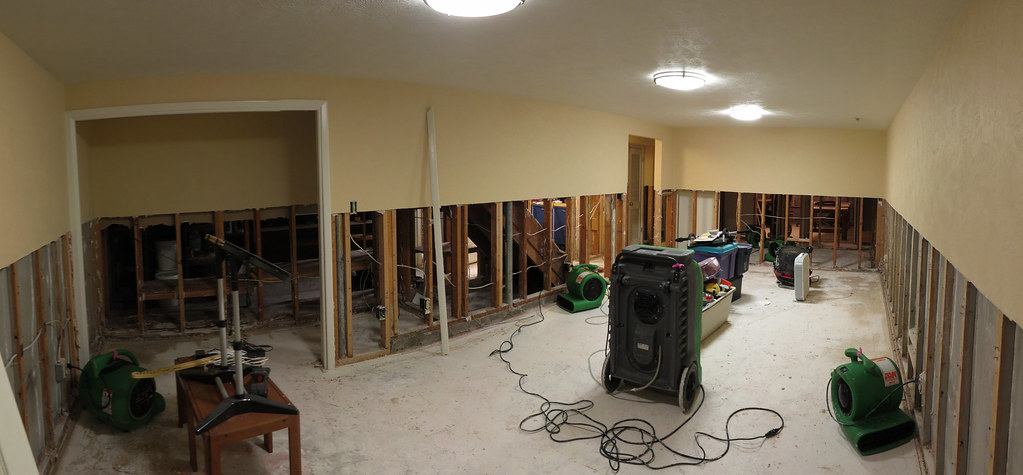
This page explains how professional extraction and drying works, what a good restoration team measures, and how long it should take, so you can judge the work being done in your home.
What extraction and drying actually involves
A professional team works in a set order. Skipping a step is the most common reason a job "dries" and then smells musty weeks later.
Stop the source and make it safe
Water is shut off, and power to wet areas is cut if outlets, baseboard heaters or a boiler are involved. Basements with standing water are not entered until the electrical risk is cleared.
Classify the water
The team identifies the water category under the industry standard (IICRC S500): clean water from a supply line, gray water from an appliance, or contaminated water from sewage or outside flooding. The category decides what can be dried in place and what must be thrown out.
Extract
Truck-mounted or portable extractors pull water from carpet, pad and hard floors. Weighted extraction tools remove far more water from carpet than a wet vac, which shortens drying time by days.
Map the moisture
Moisture meters and thermal cameras find where the water travelled: under cabinets, into wall cavities and across subfloors. Readings are recorded room by room.
Remove what cannot be saved
Wet carpet pad, swollen particleboard, wet insulation and drywall soaked by contaminated water are cut out. Often only the bottom 2 to 4 feet of drywall needs to go.
Dry and verify
Air movers and dehumidifiers run until readings match dry reference materials in the same home. The team checks and logs readings daily and adjusts equipment as areas dry.
Why Long Island and Westchester homes need extra attention
Finished basements hide the water
A finished basement can look fine after the carpet is pulled, while the bottom of every wall is wet behind the paneling or drywall. Basements also sit against cool foundation walls, so they dry more slowly and stay humid. A dehumidifier from the hardware store is rarely enough after a real water event.
Older plaster and hardwood
Many Westchester villages and North Shore communities have prewar homes with plaster walls and old-growth oak floors. Plaster can often be dried in place where drywall would be cut out, and hardwood can sometimes be saved with specialized floor-drying mats if the work starts quickly. Ask the team whether they have the equipment for both before they start tearing out.
Slab homes
Not every Long Island home has a basement. Postwar slab houses, including the original Levitt homes, can trap water under vinyl and laminate flooring, and some still have radiant heating pipes inside the slab. A leak in that system needs leak detection before anyone can say where the water came from.
How long drying takes
Most clean-water jobs take three to five days of equipment time once extraction is done. Basements, hardwood floors, plaster and dense materials like subfloor plywood take longer. Cold weather slows evaporation, so winter drying on Long Island and in Westchester often runs a day or two longer unless the space is heated.
The equipment should come out when the readings say the materials are dry, not on a fixed schedule. A good team will show you the moisture log that proves it.
| Situation | Typical equipment time |
|---|---|
| Carpeted room, clean water, caught early | 2 to 4 days |
| Finished basement with drywall and carpet | 4 to 7 days after wet materials are removed |
| Hardwood floor cupping from a leak | 5 to 14 days with floor-drying mats |
| Plaster walls in an older home | 4 to 8 days |
| Concrete slab or basement floor | 3 to 10 days, depending on thickness and finish |
What it typically costs
Costs depend on how much area is wet, the water category, and how much material has to be removed. The ranges below are rough planning numbers for the New York metro area, where labor costs run higher than the national average. They are not quotes. The restoration company gives you its own written estimate after it inspects.
| Job | Rough planning range |
|---|---|
| Single room, clean water, extraction and drying | $1,500 to $4,000 |
| Finished basement, clean water, partial drywall and carpet removal | $4,000 to $12,000 |
| Whole floor or multiple rooms | $8,000 to $25,000+ |
| Contaminated water (sewage or outside flooding) | Higher: more removal, cleaning and disinfection |
Rebuilding (new drywall, paint, flooring) is usually priced separately from the emergency drying. If you have a claim, see the insurance claim guide for what to document.
Questions to ask before the equipment goes in
- What category of water is this, and what does that mean for what gets removed?
- Will you take and record moisture readings every day, and can I have a copy?
- How will you dry inside the walls and under the floor, not just the surface?
- Do you hold the home improvement license required in this county? (Nassau, Suffolk and Westchester each license home improvement contractors, and New York City does too.)
- If mold is found, will a separate licensed mold assessor be brought in? New York requires this for mold areas over 10 square feet.
Where we help
Calls are answered for homes and businesses across Long Island, Westchester, New York City and the Hudson Valley.
Common questions
Water extraction & drying: common questions
Can I just use a shop vac and fans?
For a small spill caught right away on a hard floor, yes. For anything that soaked carpet, ran into a wall, or sat for more than a few hours, household fans dry the surface while the wall cavity and subfloor stay wet. That trapped moisture is what leads to odor and mold. Professional dehumidifiers pull far more water out of the air than consumer units.
How soon does drying need to start?
As soon as possible. Mold can start growing on wet materials within 24 to 48 hours. Clean water from a supply line also becomes more contaminated the longer it sits, which can change what can be saved.
Will my hardwood floors be ruined?
Not always. Solid hardwood that has started to cup can often be dried with specialized floor-drying systems if work starts quickly. Engineered wood and laminate are less forgiving and are more often replaced. A restoration technician can tell after taking moisture readings.
Do I need to leave the house while equipment runs?
Usually not for clean water jobs, though the equipment is loud and runs around the clock. For sewage or outside floodwater in living areas, you may be asked to stay out of the affected space until cleaning is done.
Why is the equipment still running if the floor feels dry?
Surfaces dry first. Wall cavities, subfloors and the bottom plate of a wall dry last. The team should keep equipment running until meter readings match dry materials elsewhere in your home, and should be able to show you those readings.
Does the drying company also rebuild?
Many do, but you are not required to use the same company for repairs. Get the drying done first, then compare estimates for the rebuild if you want to.
Related
Related services
Need water extraction & drying help now?
Call (800) 000-0000. Answered 24 hours a day, 7 days a week.