
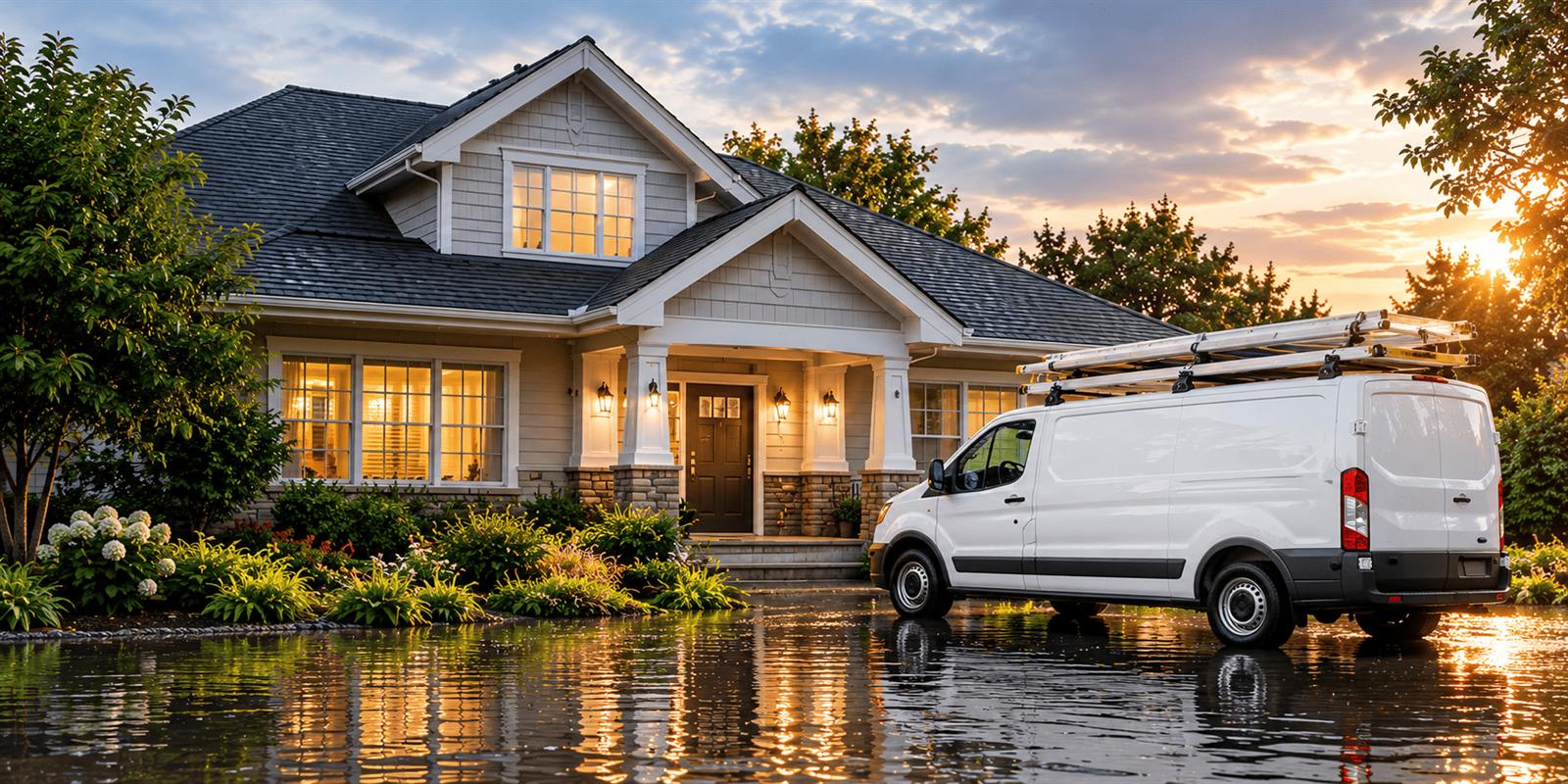
Towns of Southampton and East Hampton
Water Damage Restoration in the Hamptons
The Hamptons stretch along Long Island’s South Fork, from Remsenburg and Westhampton Beach in the Town of Southampton east through Southampton Village, Bridgehampton and Sag Harbor to East Hampton, Amagansett and Montauk in the Town of East Hampton. Water damage here is shaped by two things: the ocean and bays on every side, and the many homes that sit empty for weeks or months at a time.
The Hamptons at a glance
- Towns
- Southampton and East Hampton
- Biggest local risks
- Frozen pipes in empty homes, coastal storms, septic
- Contractor licensing
- Suffolk County Dept. of Labor, Licensing & Consumer Affairs
Answered 24/7 · free to call
Second homes and frozen pipes
A large share of Hamptons houses are second homes, rentals or estates that are empty from fall to spring. When a pipe freezes and bursts in an empty house, water can run for days before a caretaker, neighbor or alarm company notices. By then, it has soaked through floors, walls and ceilings and reached the basement.
- Keep the heat at 55°F or higher all winter, and have someone check the house after every hard freeze.
- Use a monitored low-temperature and water-leak alarm, and consider an automatic shut-off valve on the main.
- Shut off and drain outdoor showers, irrigation systems and pool equipment lines before the first freeze.
- If the house will be empty all winter, have a plumber shut off and drain the system completely.
- Read your policy: many homeowners policies limit freeze coverage in vacant or unoccupied homes unless heat was maintained or the water was drained.
If you manage a property for an owner who is away, get their written authorization for emergency mitigation in advance, so drying can start the same day.
Ocean, bays and storms
A long history of coastal storms
The Great Hurricane of 1938 struck the South Fork without warning, destroying many homes on the Westhampton Beach dunes and cutting Shinnecock Inlet through the barrier beach. Since then, nor’easters and hurricanes, including Sandy in 2012, have repeatedly flooded low areas along the bays and eroded the ocean beaches.
Bay-side and harbor flooding
Homes along Moriches, Shinnecock and Peconic bays, Sag Harbor Cove, Three Mile Harbor and Lake Montauk are exposed to storm tides and very high tides. Water entering from outside is flood damage, covered only by a flood policy.
Oceanfront erosion and wind-driven rain
On the ocean, the risk is wave attack and erosion, as in downtown Montauk, where the beach in front of oceanfront hotels and shops has had to be reinforced. Everywhere, storm winds drive rain through windows, doors and siding, which shows up as wet walls and floors far from any visible leak.
Large homes, complex systems
Many Hamptons houses have radiant floor heating, multiple water heaters, whole-house humidifiers, irrigation, pools, outdoor kitchens and showers, and finished lower levels with media rooms and wine storage. More plumbing means more places for a leak to start, and finished lower levels with high-end materials need careful drying and documentation.
Wells, water and septic
Much of the South Fork is served by the Suffolk County Water Authority, while some homes have private wells. Outside a few sewered village centers, homes use cesspools or septic systems, and many newer homes have nitrogen-reducing (I/A) septic systems with pumps and alarms that need power. If drains back up, stop using water and call a septic service company. If the system alarm is sounding, do not ignore it.
Hiring a restoration company in the Hamptons
- Ask for the company’s Suffolk County home improvement license from the Department of Labor, Licensing and Consumer Affairs.
- Ask for daily moisture readings and photos, especially if the owner is away and the insurer needs documentation.
- For mold over 10 square feet, New York requires a licensed mold assessor and a separate licensed remediator.
- For the claims process, see our New York insurance claim guide.
Every community we take calls from in the Hamptons
All of these are in Suffolk County. If yours is not listed, call anyway: the team will tell you right away whether it can help.
| Community | ZIP codes |
|---|---|
| Remsenburg | 11960 |
| Speonk | 11972 |
| Westhampton | 11977 |
| Westhampton Beach | 11978 |
| Quogue | 11959 |
| East Quogue | 11942 |
| Hampton Bays | 11946 |
| Southampton | 11968 |
| Water Mill | 11976 |
| Bridgehampton | 11932 |
| Sagaponack | 11962 |
| Wainscott | 11975 |
| Sag Harbor | 11963 |
| Noyack | 11963 (shared ZIP) |
| East Hampton | 11937 |
| Amagansett | 11930 |
| Montauk | 11954 |
Common questions
Water damage in the Hamptons: common questions
I manage a Hamptons house for an owner who is away. Can I authorize emergency work?
Only if the owner has given you authority. Many owners sign a standing authorization for emergency mitigation with their caretaker or property manager. Without one, call the owner first, then the restoration company. Stopping the water and documenting the damage can start right away.
Does insurance cover a pipe that burst while my Hamptons house was empty?
It depends on your policy. Sudden pipe bursts are usually covered, but many policies exclude freeze damage in vacant or unoccupied homes unless the heat was maintained or the water was shut off and drained. Records of thermostat settings and caretaker visits help.
Do you cover Montauk and Westhampton Beach?
Yes. Calls are accepted from every community listed below, from Remsenburg and Westhampton Beach to East Hampton, Amagansett and Montauk.
Is my Hamptons home in a flood zone?
Check your address on FEMA’s Flood Map Service Center. Oceanfront and many bayfront areas are in high-risk A and V zones, where lenders require flood insurance. NFIP policies usually take 30 days to start.
Water damage help in the Hamptons
Call (800) 000-0000, 24 hours a day, 7 days a week.