
Guide · costs
What Water Damage Restoration Costs in the New York Area
There is no flat rate for water damage. The price depends on how much area is wet, how contaminated the water is, how long it sat, and what has to be removed and rebuilt. This guide gives rough planning ranges for the New York metro area, where labor and disposal costs run above national averages, and explains what moves the number.
These are planning figures, not quotes. A restoration company gives you its own written estimate after it inspects.
Updated October 2026 · Water Restoration New York
Rough ranges by type of job
| Job | Emergency mitigation (drying) | Notes |
|---|---|---|
| Small clean-water leak, one room | $1,000 to $3,500 | Caught quickly, minimal removal |
| Ceiling and room below from a bathroom or pipe | $2,500 to $7,500 | Often includes ceiling drywall removal |
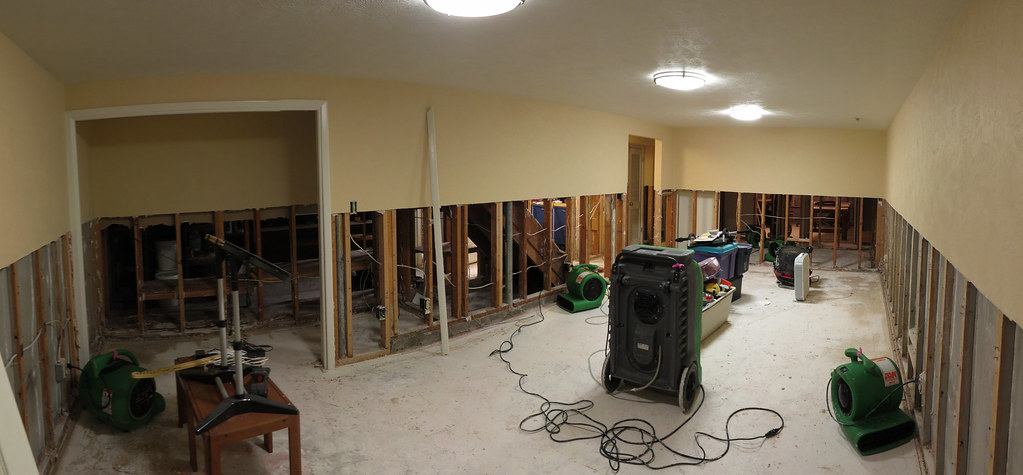
| Finished basement, clean water | $4,000 to $12,000 | Partial drywall, carpet and pad removal |
| Sewage or cesspool backup in a basement | $3,000 to $10,000+ | More removal, disinfection, protective gear |
| Outside flooding, whole level | $10,000 to $40,000+ | Flood cut, mud-out, extensive drying |
| Commercial space | Varies widely | Scale, after-hours work, specialty equipment |
Rebuilding (drywall, paint, flooring, cabinets) is usually priced separately and can equal or exceed the mitigation cost.
What drives the price
Water category
Contaminated water (sewage, floodwater) means more material is removed and disinfected, and crews work in protective equipment. It costs more than clean water.
Time before drying starts
Every day water sits, more material is ruined and clean water can become contaminated. Fast response is the most reliable way to lower the total cost.
Materials and finishes
Hardwood, plaster, custom cabinetry and stone take more specialized drying and are more expensive to replace. Finished basements cost more than unfinished ones.
Access and building type
High-rise units, co-ops with building rules, and tight urban access add labor time. Multi-unit losses need separate documentation for each unit.
Number of drying days
Equipment is billed daily. Dense materials and cold weather extend drying time.
How estimates are usually written
Most restoration companies and insurers in the U.S. use the same estimating software, which itemizes work line by line: extraction per square foot, equipment per day, drywall removal per linear foot, and so on. That makes it easier to compare your contractor’s scope with your adjuster’s.
- Ask for an itemized estimate, not a single lump sum.
- Check that equipment days match the moisture log.
- Make sure removal and disposal are listed, along with any antimicrobial treatment.
- Ask what is mitigation (emergency drying) and what is reconstruction (repairs).
Mitigation vs. reconstruction
Water damage jobs usually come in two parts, often billed separately and sometimes done by different companies.
Mitigation (the emergency part)
Everything needed to stop the damage from getting worse: water extraction, removing wet materials that cannot be saved, cleaning and disinfecting, and running drying equipment until the structure is dry. This happens in the first days and is usually what people mean by “water damage restoration.”
Reconstruction (putting it back)
New drywall, insulation, paint, trim, flooring, cabinets and fixtures. Reconstruction often needs a home improvement license, permits for some work, and selections from you, so it takes longer and is priced after drying is complete. You can use the same company or get separate estimates.
Costs your insurance may or may not pay
| Cost | How it is usually treated |
|---|---|
| Emergency mitigation for a covered loss | Commonly covered, minus your deductible |
| Repairing the pipe or appliance that failed | Often not covered: the policy pays for the resulting damage, not the worn-out part |
| Temporary housing if the home is unlivable | Often covered under loss of use (additional living expenses) |
| Mold remediation | Often limited by a sub-limit, or excluded |
| Sewer backup cleanup | Covered only with a water backup endorsement |
| Outside flood damage | Covered only by a flood policy |
This is general information. Your policy wording decides. See the New York insurance claim guide.
Ways to keep costs down
- Stop the water and call for drying immediately.
- Move belongings out of wet areas yourself if it is safe.
- Let the team dry materials in place where possible rather than tearing out by default.
- Check your coverage first: a covered loss may cost you only the deductible.
- Prevent the next one: braided supply hoses, a sump pump backup, water leak sensors and an automatic shut-off valve cost far less than a single loss.
Common questions
Related questions
Why is water damage restoration so expensive?
It combines skilled labor around the clock, commercial drying equipment billed daily, disposal of wet materials, and documentation. Costs are higher in the New York area because labor, disposal and insurance costs are higher.
Do I pay up front?
Practices vary. Some companies bill your insurer directly with your authorization and collect the deductible from you. Others require payment from the homeowner. Ask before work starts and get it in writing.
Is the estimate a fixed price?
Emergency drying estimates often change as moisture readings show how far the water went and how fast materials dry. Ask the company to explain any changes and update the estimate in writing.
Should I get several quotes?
For emergency drying, speed matters more than shopping around, because delays add damage. For rebuilding, getting more than one estimate is reasonable.
Need hands-on help?
Call (800) 000-0000 to reach a local restoration team, any time.